I love to Worship God and to help others do the same.

As I was getting Encounter ready for release I had to shelve working on several good songs which in my mind could not fit the arc of that theme. Some of them had been used on albums that are simply not available on modern streaming platforms. Others had existed as demos distributed to worship teams to enable song learning. Some had been published (some unpublished even though they’d been used live – e.g Can’t earn it – a co write with chums Ivo Ivanov and Christine Britton) but in essence now only existed on paper – no actual recordings existed. Others lay in my head with some lyrics but largely unfinished. At least one had been written whilst still at school but never in my recollection ever performed live. Ever. But still too good to waste. And the icing on the cake, one other was to come from a surprising and delightful co-write with Luciano Manfrinato earlier this year with production from him too.

In whatever form these songs had existed, it was time to finish them, polish them and get them ready to become a cohesive whole for a new album, where necessary rebuilding them from the ground up.

Where a recording pre-existed, my first port of call was to listen to that recording to see if there was anything there which might help to shape the arrangement going forward. I was essentially asking myself “Do I like this version – is it worth working with”. For the most part the answer was “there are some parts of this which are great, some which are good and some which are redeemable”. But listening with a critical ear identified parts which either needed to be replayed, edited, chopped or changed and definitely updated with new sounds. This is especially true of pianos and drums (modern keyboards or VSTs just carry so much more detail in their sample sets), but all parts benefitted from choosing new sounds or new recordings of the old.

Regarding vocals, sometimes an old performance is just right; timing, cadences and emotion. Whilst I sing in tune, these days I will check the tuning and tweak it where necessary. Harmonies benefit from being multi layered and I would have recorded any original demos with each part recorded just singly. So it’s time to add extra vocal layers and a decent vocal effects chain. But everything is up for replacement if needed. My rule tends to be that before reaching for the editing tools at my disposal I have to ask could I sing it (play it etc) better. Should I sing it differently. An advantage of the tuning tools available are that you can explore alternative harmony choices without re-singing. Even so, re-singing is often the right choice.

One of the songs I felt it was worth exploring was the song ‘Worthy’. I had pitched this song to Kevin Mayhew publishers to give me a comparison between them and what I did through CopyCare (now Song Solutions). In the intervening years and having moved house, we lost touch and on deciding upon the inclusion of this song I reached out to Kevin Mayhew and updated them with our contact details. Happily they came back to me to report that the song had been quietly earning its own little nest egg in royalties. Not huge but…something.

I liked how this song came out so much that I felt it was the main contender for the album’s title track. Adding in some ambient drumming again from Pete Welly took the track to another level. To help create a total family feel, I asked daughter Beth if she’d be up for singing the female lead part. We managed to squeeze that in to a trip to London. You’ll love this song and I think you’ll love this album.

It should be live worldwide from the 30th August 2026 – let me know in the comments which tracks were your favourite

If one album in 2025 wasn’t enough it was followed by a single release and a whole new album.

In June of 2025 my much loved big sister went in for a serious heart operation for which the success rate was high. Despite the optimism about her recovery she didn’t come around and was declared dead on 7th June.

We all have different ways of coping with grief. Mine was to pour myself into a song which I reframed for my sister. ‘Play it over again’ was released as a single in late July. Please do have a listen but be warned it is edgy and raw.

In the meantime I had been working on a collection of worship songs called Encounter. Two of the songs had made it onto recordings previously but needed reworking largely from scratch to bring them up to date. Most of the others had existed in demo form for some time but had never been released on an album, though had been either performed by me or used in worship. So cue a major rebuild with fresh sounds, tightened timing, and new vocals. Finally one song was a brand new co-write with my mate Andi Foster which featured him on acoustic and vocals with Peter Welly contributing some ambient drums.

In amongst all these great songs is a fabulous jewel – ‘Jesus how we love You’. It’s the song that first drew the attention of Nigel Coltman and Geoff Shearn at CopyCare back in the early 1990s. Delicately sung by Andrea Almeida its qualities are timeless. This edition is true to the original and includes a very Gilmour-esque guitar outro.

As ever if you have questions on processes of writing songs or recording them, then please do drop a comment below.

You can listen to all my music on any streaming platform worldwide.

I’ve so much to tell you about since I blogged last. Let me catch you up in few blogs.

If ‘Two Worlds Kissed pt1 – The Season’ was a Christmas album, ‘Two Worlds Kissed pt2 – The Reason’ had to be all about the build up to and immediate aftermath of Easter. It’s an album full of 12 beautifully crafted songs, exquisitely arranged, and lovingly performed. It mixes some classic songs going back to my late teens alongside freshly minted songs written to this theme. If you recall from my last blog, I had the idea for Two worlds kissed whilst skiing. The initial flash of inspiration held both the birth and death of Christ in tandem. So even whilst I was working in part 1 to get it ready for Christmas, I had started writing and shaping songs for part 2.

One song I’m particularly pleased with is the final track – The Name. It’s a song which came out of a spontaneous worship moment in Brazil as we sang together the name of Jesus in a congregation of several hundred people. It was intense and beautiful, and it was such a sacred moment that any follow up song had to match that moment in Spirit. Inspiration came as I read Philippians 2 which culminates in Jesus being given the highest name. Words suggested themselves from the pages of The Book and a tune followed leading to the song’s climax of singing the Name. The worship team at Cheltenham Elim helped provide some crowd vocals: I had wanted to use the recording I had from Brazil but it wasn’t clean or clear enough.

Judge for yourself and maybe let me know in the comments what your favourite track is. You can listen on any streaming platform.

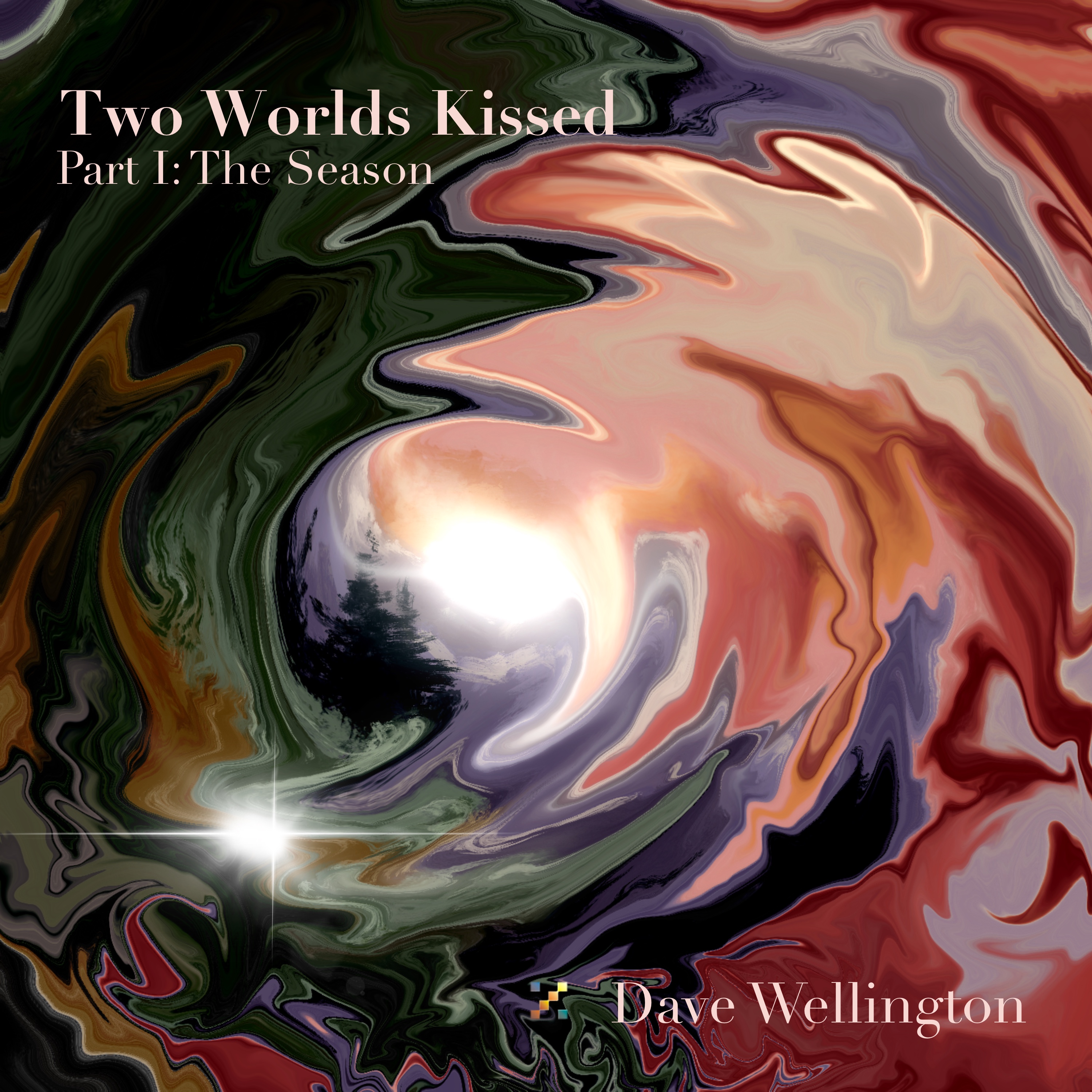
As I write this blog, I am excited that my latest album called Two Worlds Kissed – Part1: The Season is now out and available on all streaming and downloading platforms worldwide. As it happens it is a Christmas album. I want to tell you the story of how it creatively formed.

2022 had been a busy musical year for me culminating in the release in 2023 of 3 albums, 1 album of story songs and 2 albums of worship songs. A total of 32 tracks were honed, given spit and polish and released on those 3 albums. Even so, there were still more than enough unreleased tracks for a further one or maybe two albums. So, I collated some demos and began to listen with a view to putting out another album in 2024.

I did this in the tail end of 2023. Two things popped out at me: Firstly, there were some significant tracks relating to the cross, both the work of Christ through it, and our response to it. Secondly, I realised that my previous Christmas album, released in 2007, was losing its freshness and I wanted to find a new creativity for future festive seasons.

I was undecided as to a direction for any production but with time my side I waited and pondered, and I prayed as we headed in to 2024.

In early February we went off on a skiing holiday to Grindelwald in Switzerland. I love skiing and I love the mountains – the vistas and the fresh air. They are such inspiring spaces. It was whilst skiing one day I had what I can only describe as a God moment, an epiphany, and all my ponderings to that point came into sharp focus in the realisation that both Christmas and Easter represented moments in human history when the earth we live on was kissed by heaven; moments that changed everything. The impact on me was so profoundly moving that I nearly lost it on the piste – I had to get quickly to the side to recover. Whist I paused there, a lyric and a melody rose up and I began singing it out, hastily grabbing my phone to capture the result.

I now had a clear creative urgency and direction to sort the demos which could fit with such themes. There were only 3 possible songs. It was therefore time to get busy in the studio and get creating. As I poured myself into songwriting I found some fresh ideas in the Christmas story – ideas which had not been presented before, or at least had not been presented in this way and definitely not by me. Before I knew it, I had an album’s worth of ideas ready for full production, but the ideas did not stop flowing and I shifted focus from Christmas to Easter. More new songs came. But excitedly as I revisited some songs written decades ago (but which had never aired in public), I found their content and style absolutely fitted.

It then became a process of completing and polishing what was there. That epiphany had been so strong, I knew that I had to bring my ‘A game’ to every aspect of the process. A dodgy lyric line – rewritten and/or re-sung. A poor guitar part – replayed. Piano parts, strings parts, organ parts – all honed. Editing was down to the smallest of details. I wasn’t representing me – I was representing something far greater, something that required my utmost for his highest.

So, Part 1 is out. It has already invigorated many, from the youngest – dancing to the groovy tracks, to the oldest – who reckon it has a melody. The feedback has been so positive. It is spurring me on to make ‘Two Worlds Kissed – Part 2: The Reason’ even more EPIC. Another 10 songs (at least) which this time will bring the death of Jesus into stark relief. Spoiler alert – his death is not the end 😊

I hope you enjoy Part 1 in the meantime – get it on your Christmas playlists. Sing along in your car. Get hold of the lyrics – they should be on this website www.davewellington.org in the resources section very soon.  

Blessings

Dave

You know what it’s like. Somehow this week everything has been against you, a litany of troubling stuff – the kids, the car, the plumbing, the electrics, the traffic, the job, the shopping, the bank balance – and they all add up to leave you feeling wrecked, empty, frustrated and down. And of course you are on the rota to lead worship this coming Sunday.

You now have perhaps three basic options.

1 you cry off leading worship

2 you lead worship as if everything was fine

3 you recognise what’s been going on, so you lead from a place of brokenness.

1 is dangerous. God has called you to this. Don’t give up on your calling. Press into God for His strength to pull you through. That advice comes with a red flag of its own. Are you at a breaking point? If so the right advice might be to plan a break, a holiday, some quality rest, even some spiritual input, a worship conference perchance. Not this week, but very soon! We have to wise up about the state of our metal health, but balance that with a steadfast faithfulness that will not give up easily.

2 if you are a leader, this might be you normal option. You get your game face on and get on with the job. It’s not quite living in denial but it is summoning the strength to rise to the occasion – that amazing opportunity to be a part of that which lifts the spirits of the congregation that you serve. You will most certainly feel better after a worship session like this and God will honour you for your servant-heartedness.

3 is also an incredibly important option. This is you being vulnerable and hopefully curating songs to lead people through your pain and out into hope, recognising that there will be many who will resonate with your experience. You can certainly see this at work in some of the Psalms. Beware though of this becoming a pity party or of leading people into hopelessness. Even from a pit of despair we still look up in hope, after all, Salvation is a much broader word biblically than how we tend to use it these days. But of course vulnerability is also a close relative of authenticity. You must be authentic, otherwise what you are offering is not really worship. It’s how you do that when you are in front of the congregation. Maybe you need a personal worship time, just you and Jesus where you can lay all the cares and woes before Him. Then come before the congregation to lead them from the place of the renewed strength you have received.

In the meantime whether you are feeling like option 1, 2 or 3, if you are at a point of breaking, you need to be talking with your pastor and exploring options for moving forward. You are not indispensable after all! Together, can you identify someone who is or can be a part of your team who would be able to lead worship in your stead? If so, great – develop them and learn to delegate to them. Or are there worship leaders around the town or city who you could call on to cover? If not, there are tech means these days to provide a competent someone with the tools to provide some music for sung worship (I’d suggest this is the emergency backup option!). It will be different but importantly you’ve planned it and put it in the diary and you get to have a well-earned break.

There has always existed a confusion about the identity of the Church, at least to those looking on and even to many who are involved.

In the UK, we are surrounded by everything from the tiniest chapels to the biggest, grandest Cathedrals and they all fall under the rough heading of ‘Church’. The confusion exists because these are just buildings – often built very lovingly, creatively, beautifully and with a desire to model the glory of God, but still just buildings. The church is not now, and never has been, a building! The Church is the people – the living stones, the body of Christ and his bride to be. The buildings are there in Europe to keep us dry, and warm in winter when we gather together, and as spaces to welcome us as we gather.

It has been observed in this season of lockdown that the church has been closed. Well, no – the buildings have been closed for many, but the church has carried on meeting by a huge variety of means. Technology has been mastered to provide us with virtual meeting spaces. We are so grateful for the likes of Zoom, Teams, YouTube and Facebook Live (other platforms exist!) which have enabled this. We’ve also learned a lot about getting things to sound and look good so that visitors and regulars alike are engaged rather than put-off.

Importantly, together we have learned more deeply what it has meant for our own homes to be places of worship and the centrality of our own family altar. Worship is so much more than a song, so much more than a musical performance. The Holy Place is not about geography it is about an attitude of heart.

Since lockdown began I have been aware that I need to model the altar of worship in my own home; to welcome the Lordship of Christ into my own living space and to offer him my devotion. This idea sparked a conversation with my son about how we might do that together, capture the results, and then invite you to worship with us. So we set up our lounge with a keyboard, a guitar and a vocal mic and we picked 9 songs that I’d written, stretching back over the the years and sang and played our hearts out together. There were moments of joy and laughter and moments of deep worship. There we praised! It was a special afternoon – we had a lot of fun, and God was with us in the room.

Once we had had a good cuppa, we reviewed what we had done and saw that it was good, we also realised we could do something more with it. Thus began the painstaking process spread over many months, working around two very busy schedules, to add other guitar parts, vocal harmonies, pads and organs, drums and bass until we had really full sounding songs. The final mixes sound so fresh and contemporary, despite the oldest being 20 years or so old!!

Our invitation to you will be to join us as we release them after Easter 2021 and enter the Holy Place where you are to worship Almighty God – let us honour him together.

See you there

It seems like for years that a main thrust of those of us who teach and train worship teams has been to bring an excellent performance ethic into an already overflowing heart of worship. It comes as something of a surprise then that in our current COVID shaped landscape congregational sung worship has been chained (limited by governments fearing churches could become super-spreaders of the disease) with the result that the sung worship we’ve been training for has become diminished in its scope. Our on-line services are valiantly streamed with songs embedded in the hope that at home people will be joining in with gusto. But have you ever tried doing congregational worship on your own accompanied by your laptop speaker? Immersive it is not! Even with the rest of the family joining in, I suspect that there will be an abundance of self-conscious worshippers.

In thinking and praying about this I wonder what the future direction might be? As a result, I have some ongoing thoughts which I hope may help, particularly those in Pentecostal and Charismatic churches.

  1. All of that excellence must not be forgotten but needs to be channelled into getting the one or two songs you as the worship leader will sing as polished as possible. Yours may be the only voice heard. Let it be in tune and in a key to suit your voice. Let the music support and embellish that vocal. Let it breathe in order that the gathered few allowed in the building (depending on the size of that building) can at the very least reflect on the goodness of God and the depth of the sung lyrics (as opposed to being offput by a shoddy piece of singing or playing)
  2. If it is up to you to choose, pick songs which draw you to worship or praise, or which draw from the depths of your spirit offerings of thanksgiving. Be authentic to the gift that is within you. After all, people cannot in this current time join with you in song. But they will join with you in an act of worship if you are worshipping.
  3. Repetition in this season is of limited point. So pick songs which are already lyrically rich and which allow your congregation (both in the building and watching on-line) to reflect upon the depth of meaning of a song. This isn’t a plea to return to classic hymnody, but you would certainly find some rich veins to mine there.
  4. Since the congregation are currently not allowed to sing, there may be a case to find songs that they don’t know which are nevertheless worshipful but away from the normal staples of current public worship. CCLI has Hundreds of thousands listed. If the congregation don’t know them, they will be less tempted to join in regardless. Oh, and by the way, if they do join in, that could cause quite a headache for your pastor…  
  5. If they are not allowed to sing, what else can they do?
    I think spoken recitation and spoken prayer can be done – masks on please!
    How about reciting a Psalm? (Choose wisely!)
    How about doing a call and response prayer?
    How about borrowing some formal liturgy?
    In this season your job as worship leader isn’t just about choosing songs and singing them in services (not that it ever was though) but it is about finding ways to engage the congregation under your care so that they worship God. When the music fades worship leaders step up and still manage to create a space where worship happens, it’s just not sung worship.

This is a difficult time for worship teams and musicians. Perhaps it’s time to lay it all down again in an act of sacrificial worship that at the right time we will be renewed and ready to serve.

God bless all of you in this season

There rages a controversy across the world of worship leaders and singers. It can be summed up like this: we are here to lead worship, not to perform! This is taken as an immutable and reverential truth. Of course, it is just plain wrong! Before I dig down into what I think is a healthy and a right way to perform as a worship leader, let me first give you some background colour.

Step back to the era around the time of the reformation. Church was a pretty divided community. You had the priests along with the choir who would perform the services, and who would do so behind a highly decorated, tall wooden screen, by the high altar. The music was fabulously complex, often taking a couple of pages just to convey the first syllable of the word Hallelujah! Songs were sung over a congregation, not by a congregation. On the other side of the screen were the gentry, the peasants and all other communicants. Cathedral worship was a spectacle and in a world prior to TV, often the only visual entertainment to be had freely. Cathedrals themselves were remarkable spaces, filled with great creativity both in architecture and in art. Stained glass windows wrought ever changing beauty throughout the days and seasons both inside and outside.

Into this world strode the great reformers. Their understanding of scripture, freshly translated into vernacular European languages from long hidden Greek texts, brought new insight across the world of theology and its practise. One of the five principles they championed was The Priesthood of All Believers. For them there was no division between congregation and priesthood. We are all one in Christ – a Royal Priesthood, a Holy Nation. Another hugely important principle was the pre-eminence of the word of God. Gone were the books of traditions from previous teaching. The scriptures were no longer the preserve of the educated Latin trained priests – no, they were available in the common spoken language of the people. And gone were the elaborate songs. Instead, hymns of praise were raised using the language and music of the folk who attended. Martin Luther famously put fabulous lyrics to German beer drinking songs, the familiar tunes aiding the spread of this new Lutheran, reformed theology.

As this new theology settled across Europe and the New World, it resulted in some interesting ecclesiological developments. In reformed churches there were no screens – no division. Buildings were simpler and deliberately not ornate or embellished. In order to show the pre-eminence of the word, pulpits were often tall, but designed so the preacher was not viewed easily. It was after all about the words spoken, not the speaker. Music was congregational and theologically rich. In essence it leaned far more heavily on the ancient synagogue model of worship than that which it replaced.

The flaw (you can see it can’t you!) is that the church God designed is for people and people have personalities and faces. Indeed, recent studies have shown that human communication is 7 percent verbal, 38 percent vocal and 55 percent visual. If you only listen to a voice without seeing a person, you dip out on over half of what is being communicated. Over half! Remember these statistics because they will be important in a moment.

So, we exist today in this dichotomy of reformed theological thought: we need to see someone in order to understand the totality of what they are saying or doing, but we don’t want to see them in case we are distracted or misled by them in some way. We are thus left in this awkward spot of thinking that performance is a bit of a dirty word when it comes to leading and being led in sung worship.

A worship leader’s role is to select songs, and in conjunction with the Holy Spirit’s leading take a group of people on a musical journey into an encounter with the heart of God. In doing that they are operating in a manner not so far removed from an ancient OT priest. Why do they get that role when we are all priests – surely, they can’t claim that role? Yet in church as we know it, they get to do what they do usually because they are musically and/or vocally gifted. They are on the worship team because they have demonstrated character over and above plain gifting. So if you are more musically gifted and can demonstrate character in spades, get on the worship team and serve in whatever way you can; musically, vocally, words, tech, lighting, set design, costumes…. I run ahead of myself here!

That worship leader’s job is only so much about music, only so much about the spiritual aspect too. It has a lot to do with leadership skills and communication. It is a part of their role to be a significant part of the welcome someone gets. They draw people into community through shared songs and experiences. They also draw them along on a journey, a story arc of song, striving to avoid musical manipulation and working hard to keep their intention pure. In order to do that most easily they take their place on a platform designed for visibility so that through their leadership, the congregation they are serving can follow them along sacred paths of anointed music. If their direction is unclear, there will be those who falter. If their example is impure then there are those who will be distracted.

The question then has to be posed – how does a worship leader lead?
They do it skilfully, prayerfully and they do it through their performance. When they sing, their voice lives every word of the song. If their voice does, their face should also. Their body language needs to match the song meaning, conveying the nuances of a deep personal life of worship and devotion put into practice. Put baldly, if it’s an exciting song – they dance. If it’s an intimate song they kneel. If it causes their spirit to rise, then they raise their hands. These are very simplistic examples. But recall our earlier statistics – body language conveys a huge amount of information to those who are looking on. The message the leader demonstrates will help the congregation on their journey of worship. To list all the options is probably not helpful here but I say to worship leaders that their leadership needs to be visible. They need to be the living embodiment of every song they are singing. (It’s worth mentioning that this goes for the whole worship team as well)

As I watch worship leaders and teams do their thing, I realise that it is this visibility which is so often an issue. To take an incredibly intimate part of you and put it into the public domain brings a level of vulnerability and exposure that many find uncomfortable. So, the ‘rabbit in the headlight’ stare is common, as is the ‘eyes closed- all the time’ security blanket! Could it be that a part of the root cause is that these worship leaders are having an internal monologue as to whether they should even be there? They know that they are stood in front of people and that means they are performers but, that deeply rooted Reformed theology suggests they should not even be seen – they are thus in conflict. I think it is time that we recognise that leading worship successfully is often down to performing well, an area that is often ignored when training is given. That means the worship leader is attentive to musical issues, lyrical issues, communication issues, spiritual issues, service connectivity issues, relational issues and so on for the team and for the congregation, in fact everything connected with a good performance. If I am training people to lead worship, then that must be a core part of their understanding – they are performers communicating with and leading a congregation.

Training to lead worship must then surely look similar to training as a performer. A musical performer, perhaps a singer/songwriter writes a song about some major emotional turmoil they have gone through. It then costs them to sing it because every time they do, they will be re-living an aspect of that emotion. But they do it because they realise that there will likely be someone else in the crowd who will have felt something similar. If they do not sing that song authentically then the song falls flat, and people don’t connect. For that performer it will likely mean a loss of sales. So they put their emotions on the line and sing – be it happy or sad. Their chief aim is to communicate, to resonate with their audience.

So it is with worship leaders (and worship teams). They will have had some intense moments, caught up in the presence of the most high God. Out of those experiences perhaps songs or groups of songs have tumbled. For them to sing those songs is to explore those spaces where their lives have been (and are) laid open before God. And sing they must – with all the emotional possibilities that might ensue. There is an open possibility that the designated worship leader could be too overcome with God’s presence to even stand up. As they perform a song with all that it entails, the leader puts themselves into a position of openness before everyone else. Maybe rehearsal will have prepared them for the possibilities but often these moments meet us in surprise.

I trust this has drawn for you a form of parallel so that you can understand some of what is going on in a worship leader’s heart and mind. They stand in the role of communicator, connector, far more than just a singer or musician. In order to do that best, they must perform with all the skill that they have learned – and yes, performance is a learned skill – an art form in itself. Worship leaders – accept this truth – you are performing, and you stand before the King and before his people to perform – so do your very best. It may appear that a worship leader uses similar tools to a secular performer – but the secular artiste’s goal is to get everyone’s eyes fixed on them. Our tool kit might be the same, but our objectives are wildly different. The worship leader’s role is to use whatever means they have at their disposal to point people to Jesus. He’s the famous one and the absolute focal point, let nothing and no-one get in the way of His glory.

In late 2018 I had a chat with Andy Baker who was looking to stir up more songs from within the local church for the local church worldwide.

I felt that this was something whose time was right and I opted to join in with a group of songwriters who were helping to build some momentum for Homegrown Worship. You can read more of Andy’s heart and the story of Homegrown Worship and this link will also allow you to join their mailing list to stay informed about the future developments. You can catch the story of the various writers there too as their songs go public throughout the year.

Then, in a flurry of late year activity we submitted demos and started working on polishing, upgrading and re-recording them for radio ready release in 2019.

I was rather humbled to discover it would be me who would be picked to spearhead the new batch of songs for 2019 with ‘I’ll wait for You’. I was subsequently completely delighted to find that the song has been so well received, being taken up by many websites and making the Premier Christian Radio A-list playlist. You can catch it below – be sure to listen to it all – surprises await.

The intention for these songs is not just that they will provide you with a great listening experience but also that you can be equipped with all you might need to play it for yourself – here then is the lyric/chord chart.

I’ll wait for You

If you pop over to Homegrown Worship you’ll be able to access more detail about the song and how I wrote it.

Deep Joy

Dave